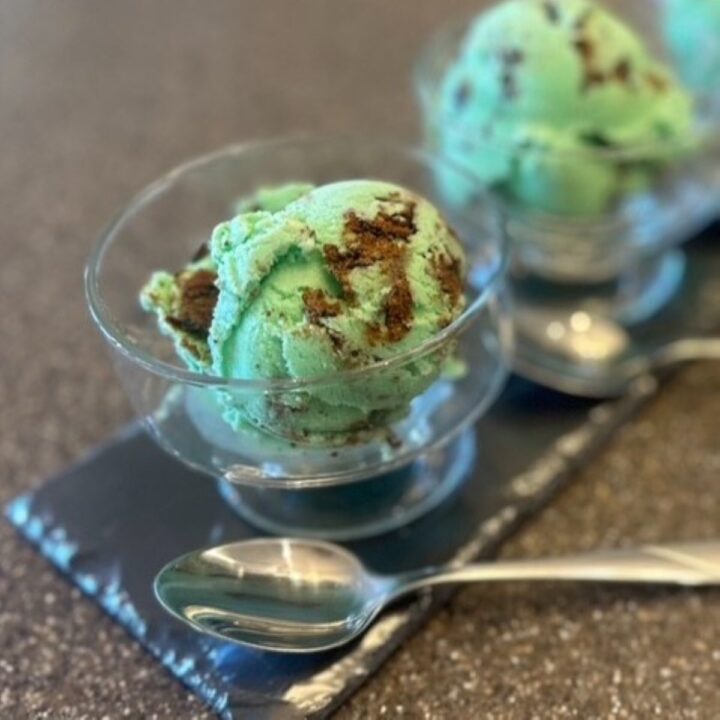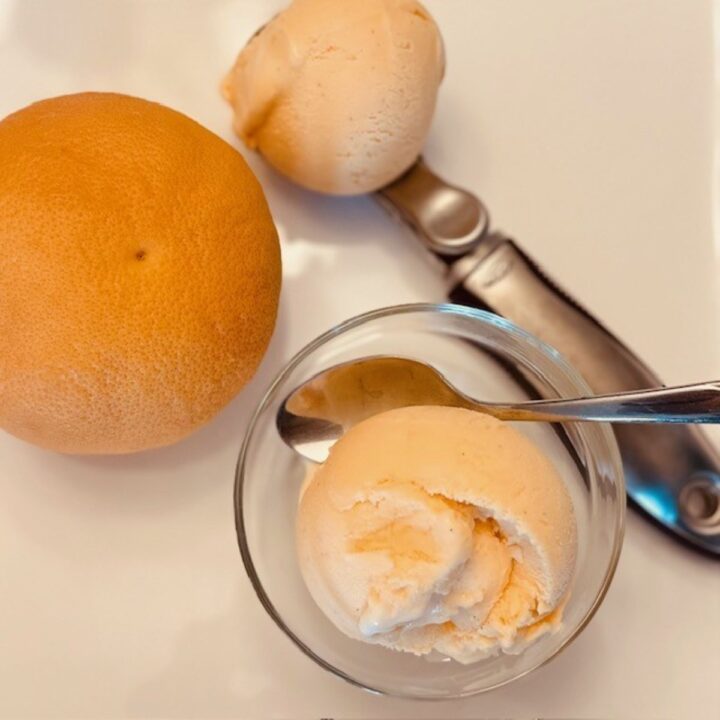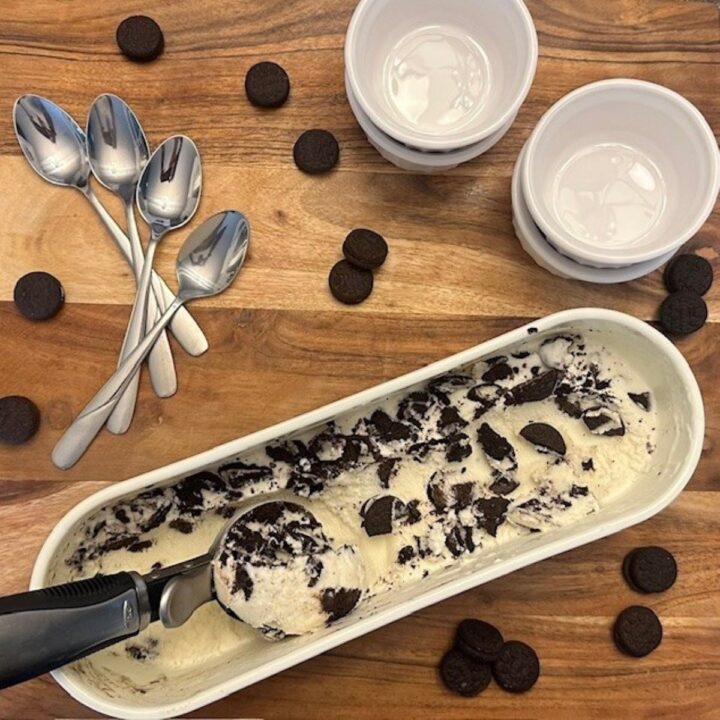
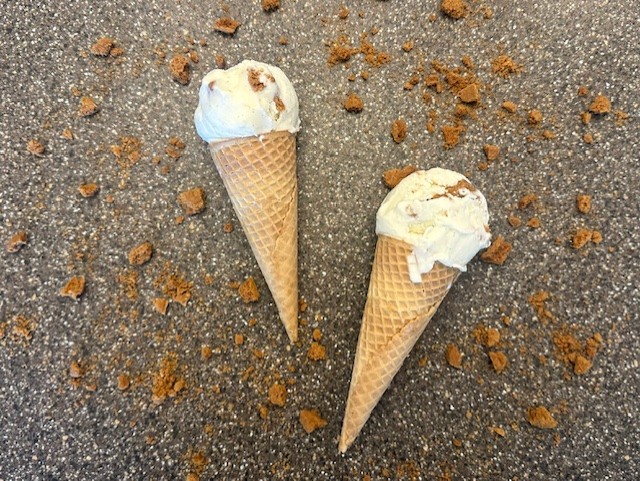
If you've recently flown with Delta or American, chances are you've had the privilege of enjoying the popular in-flight snack, the Biscoff Cookie. With its crisp texture, and caramelized spices of ground cinnamon, nutmeg, ginger, allspice and clove, this unique cookie pairs as well with a cup of coffee or tea as it does crumbled and mixed into delicious, vanilla ice cream.
We recently had friends in town for a few days, who brought their children with them, two amazing young men who also happen to be very talented and creative fellow foodies! While showing them around the pantry so they could help themselves to snacks, Liam saw the small bag of Belgium Speculoos cookies leftover from a recent flight and said something I'd already been thinking of... "those would be really good in ice cream!" The next day, his brother Luke and I made a fresh batch of Biscoff Cookie Ice Cream and everyone loved it. Luckily, the cookies are readily available in the grocery stores, too, because I've made this ice cream multiple times since then, no air travel required, and it continues to be a favorite.
INGREDIENTS
- 2 Cups Whole Milk
- 1-¼ Cups Heavy Cream
- 1-½ Tbsp. Cornstarch
- 2 oz. Cream Cheese
- Pinch Sea Salt
- ½ Cup Granulated White Sugar
- 1-½ Tbsp. Light Corn Syrup
- 1 Tbsp. Pure Vanilla Extract
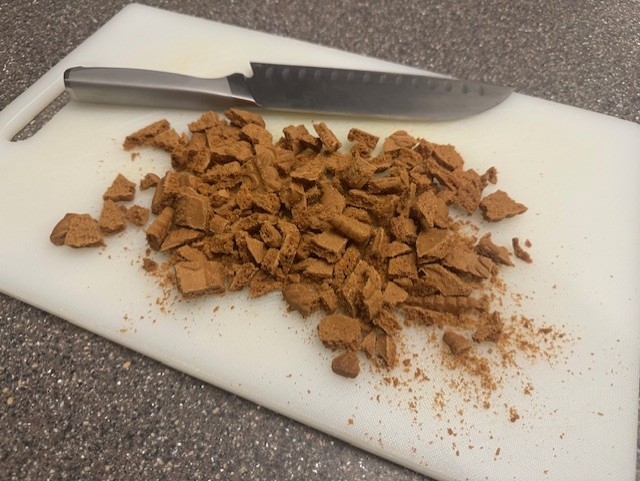
- 5 Biscoff Cookies, chopped and crumbled
INSTRUCTIONS
Note: If you are using an ice cream maker that requires the canister to be fully frozen prior to use, make sure to put it in your freezer at least 48 hours beforehand. The ice cream maker I use here at home does not require pre-freezing. Its fully automatic and has a commercial-quality compressor built in, which allows you to make batch after batch. Unfortunately, the exact Cuisinart ICE-100 model I own is no longer available for purchase, but if you enjoy making homemade ice cream, it's definitely worth the investment to buy a machine with the built-in compressor.
Step 1: Gather all of your ingredients.
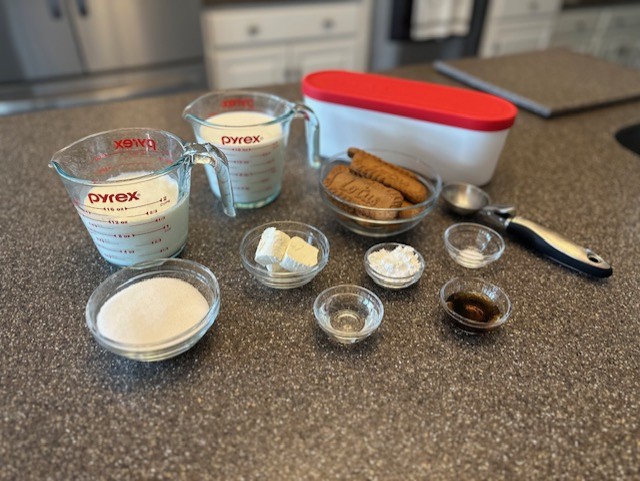
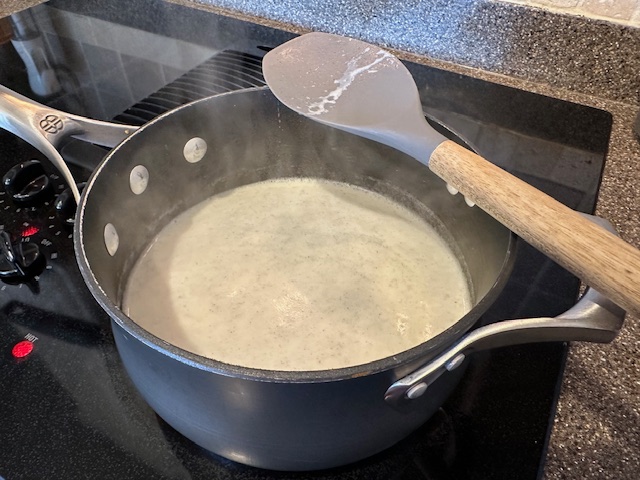
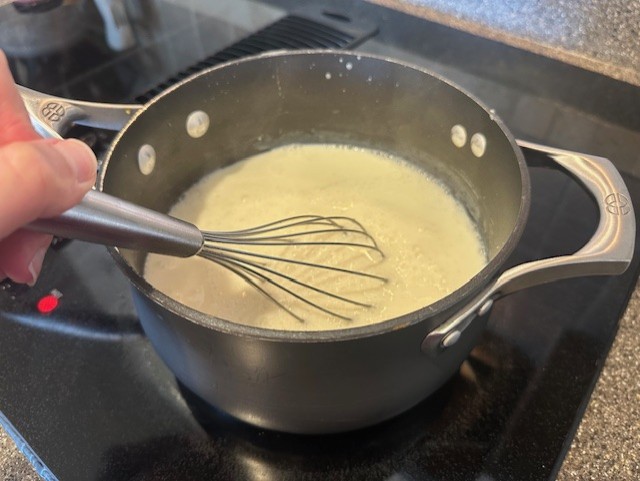
Step 2: Over medium-low heat, pour all but about a quarter cup of the milk (does not have to be exact), the heavy cream, the sugar, the corn syrup and the vanilla extract into the pot and warm the ingredients.
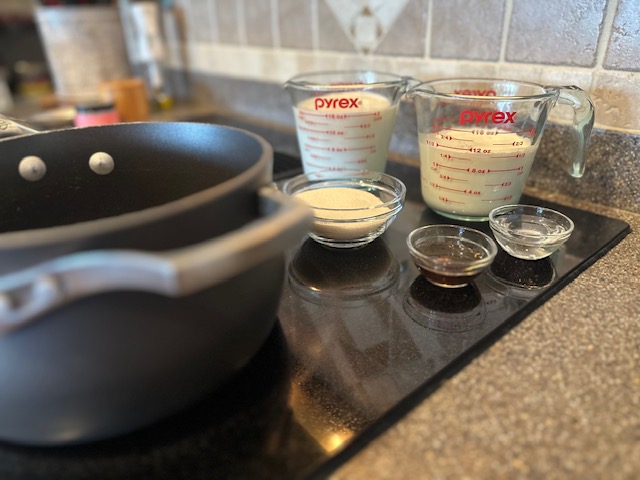
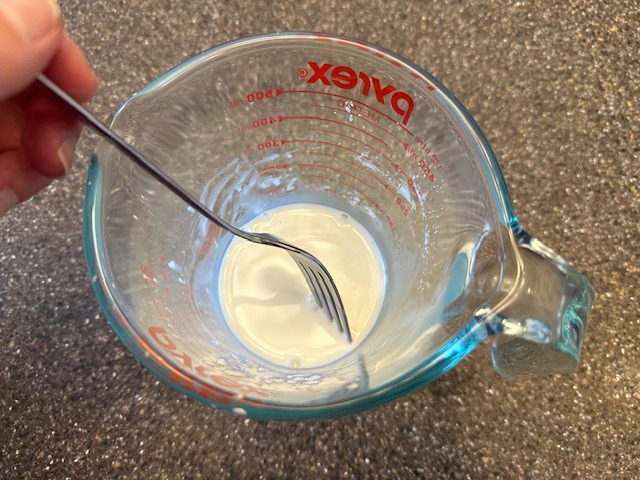
Step 3: To the reserved milk, mix in the cornstarch until you have a thickened slurry. Set aside.
Step 4: Once the pot begins to steam, increase the temperature to a very low simmer. Remove the pot from the heat, whisk in the cream cheese, the cornstarch slurry, and a pinch of sea salt, then return the pot to the stove. Bring the mixture to a light boil for a few minutes, just to make sure the cornstarch has cooked, and the cream cheese has melted and been incorporated. The ice cream base should be thickened slightly.
Chefs Note: The corn syrup and cornstarch act as thickening agents and give the base more body, while the addition of cream cheese, made with two key ice cream ingredients, milk and heavy cream, also contains guar gum, a natural thickener and aids to prevent ice crystals from forming during the freezing process.
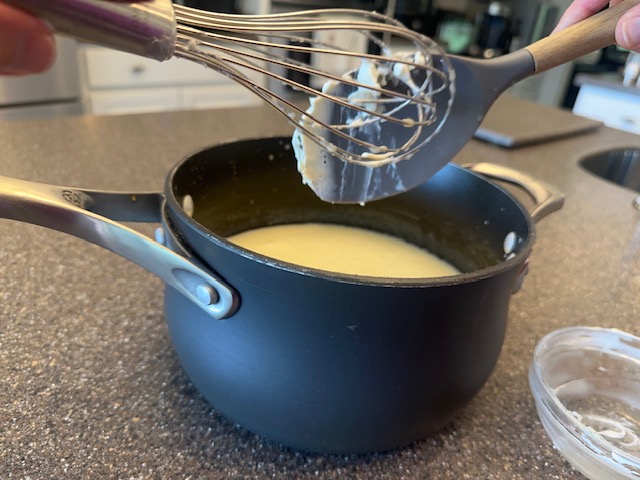
Chefs Note: The corn syrup and cornstarch act as thickening agents and give the ice cream base more body, while the addition of cream cheese, made with two key ice cream ingredients, milk and heavy cream, also contains guar gum, a natural thickener and aids to prevent ice crystals from forming during the freezing process.
Step 5: In the meantime, set up your ice bath by filling a large bowl with ice water, and place a smaller bowl in the center.
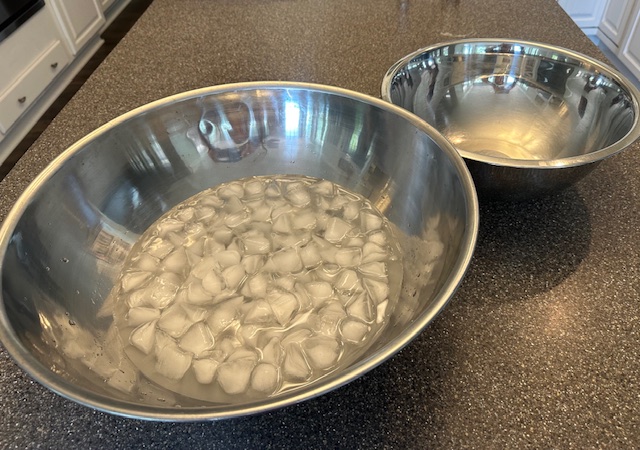
Step 6: Remove the pot from heat, whisk the ice cream base furiously to begin the cooling process, and then pour the mixture directly into the center bowl. Continue whisking while the liquid continues to cool. It doesn't need to cool completely at this stage, just enough so that it's no longer steaming, and no longer hot to the touch, maybe about 10 minutes.
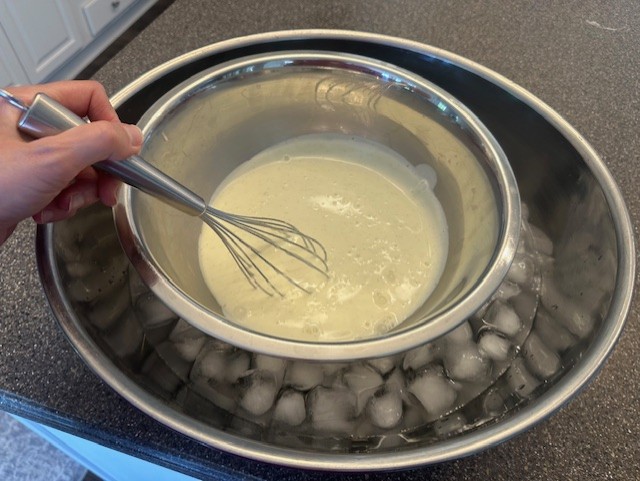
Step 7: Pour the cooled ice cream base into a quart-sized container with a tight-fitting lid, or a bowl that can be covered tightly with plastic wrap. Place the container in the refrigerator and allow it to chill and set, a minimum of 4 hours, or overnight.
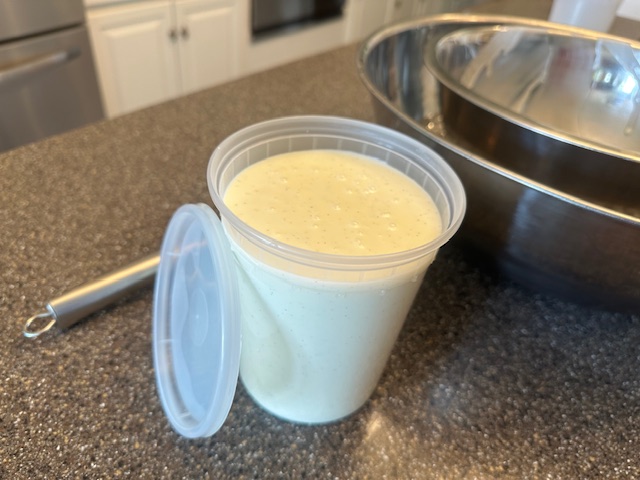
Chefs Note: If you're in a hurry, keep the mixture in the fridge for about an hour, and then move it into the freezer for another hour or so. The texture (and temperature) of the base is an important step in ensuring the perfect texture of your finished ice cream, so try not to rush this step if you can help it.
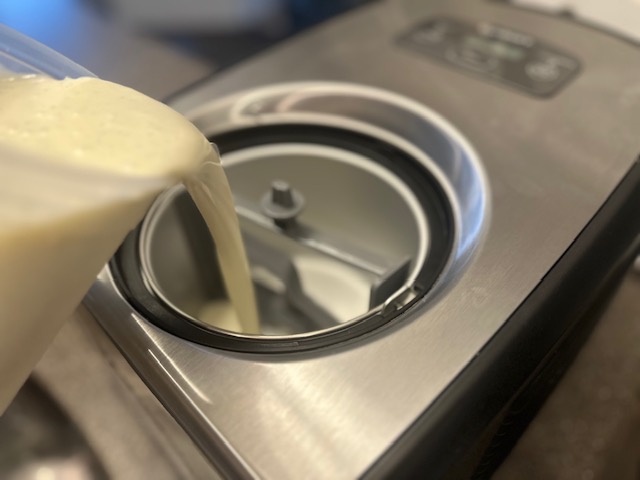
Step 8: After your ice cream base has had time to chill, you can begin to set up your ice cream maker. Pour the mixture directly into the base, following the instructions of your particular equipment, and begin to churn. The process takes anywhere from 30-60 minutes. Have your ice cream container ready to go, so you can quickly move your ice cream directly from the machine to the container, add your mix-ins, and pop it into the freezer for the final stage.
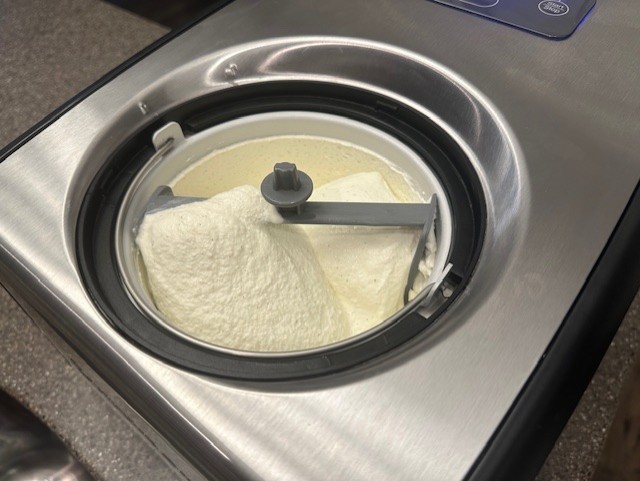
Step 9: You'll know that your freshly churned ice cream is done once the mixture is thick and creamy, similar to the texture of soft serve, the machine has started to slow down a bit, and/or you may be able to see that some of the ice cream has begun freezing along the sides of the canister. You want to avoid over-mixing, as this may damage your machine.
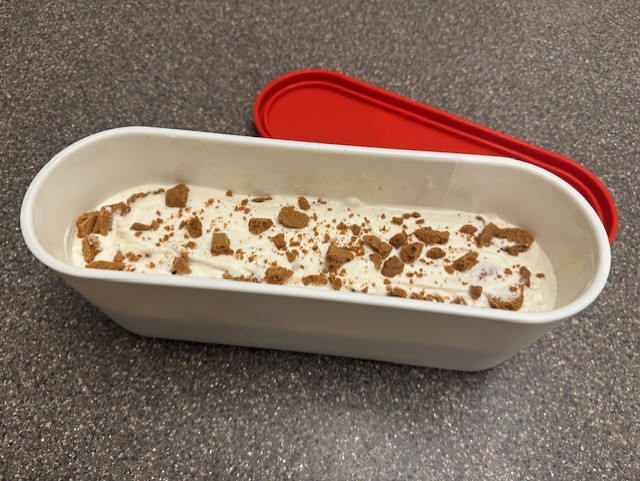
Carefully spoon out the ice cream and place it directly into your ice cream container, layering chopped Biscoff cookie pieces and crumbles as you go. Secure the lid and pop the container into the freezer as soon as you can to avoid allowing the ice cream to melt. For the ideal, finished ice cream consistency, you'll want to allow your ice cream to freeze for about 6 hours before it's a perfectly scoopable consistency.
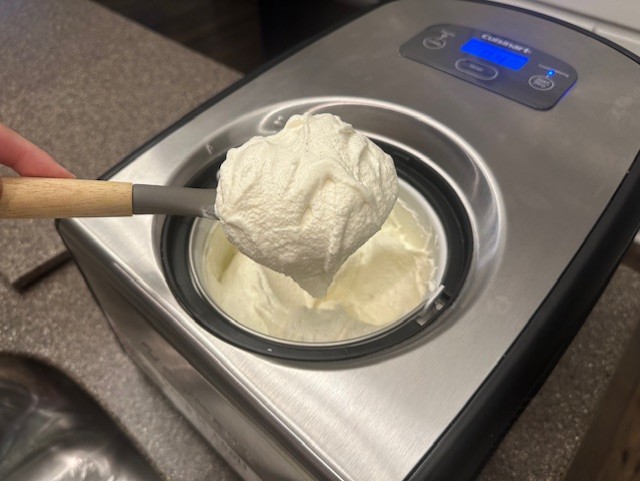
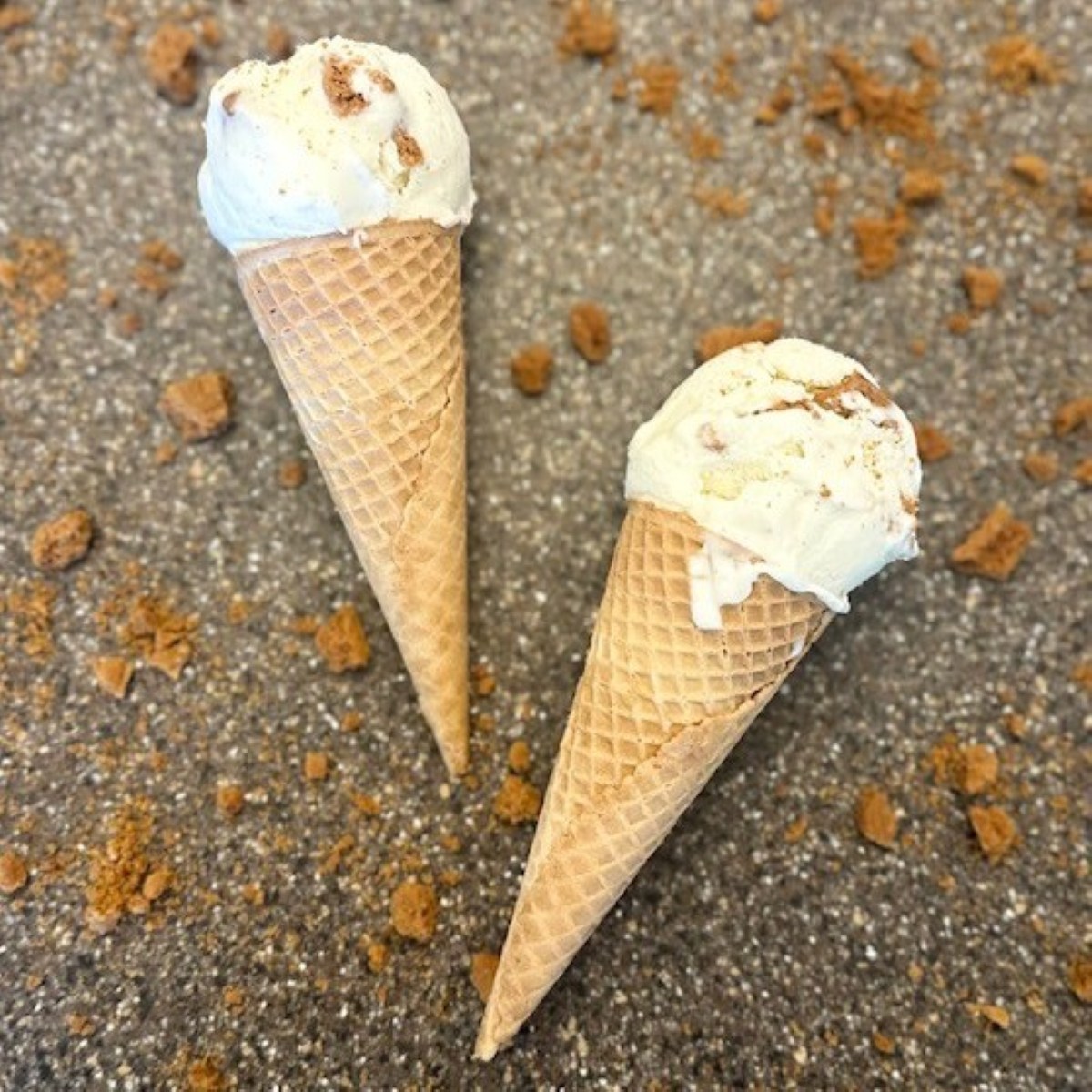
Biscoff Cookie Ice Cream
Equipment
- Measuring Cups and Spoons
- Large, Heavy-Bottomed Pot
- Fork
- Wire Whisk
- Rubber Spatula
- Large Bowl, filled with Ice
- Medium Bowl
- Quart-Sized Container, with Lid (or plastic wrap)
- 1-½ Quart Ice Cream Container
Ingredients
- 2 Cups Whole Milk
- 1-¼ Cups Heavy Cream
- 1-½ Tbsp. Cornstarch
- 2 oz. Cream Cheese
- Pinch Sea Salt
- ½ Cup Granulated White Sugar
- 1-½ Tbsp. Light Corn Syrup
- 1 Tbsp. Pure Vanilla Extract
- 5 Biscoff Cookies, chopped and crumbled
Instructions
- Note: If you are using an ice cream maker that requires the canister to be fully frozen prior to use, make sure to put it in your freezer at least 48 hours beforehand. The ice cream maker I use here at home does not require pre-freezing. Its fully automatic and has a commercial-quality compressor built in, which allows you to make batch after batch. If you enjoy making homemade ice cream, it's definitely worth the investment!
- Gather all of your ingredients, along with your heavy-bottomed pot.
- Over medium-low heat, pour all but about a quarter cup of the milk (does not have to be exact), the heavy cream, the sugar, the corn syrup and the vanilla extract into the pot and warm the ingredients.
- To the reserved milk, mix in the cornstarch until you have a thickened slurry. Set aside.
- Once the pot begins to steam, increase the temperature to a very low simmer. Remove the pot from the heat, whisk in the cream cheese, the cornstarch slurry, and a pinch of sea salt, then return the pot to the stove. Bring the mixture to a light boil for a few minutes, just to make sure the cornstarch has cooked, and the cream cheese has melted and been incorporated. The ice cream base should be thickened slightly.
- In the meantime, set up your ice bath by filling a large bowl with ice water, and place a smaller bowl in the center.
- Remove the pot from heat, whisk the ice cream base furiously to begin the cooling process, and then pour the mixture directly into the center bowl. Continue whisking while the liquid continues to cool. It doesn't need to cool completely at this stage, just enough so that it's no longer steaming, and no longer hot to the touch, maybe about 10 minutes.
- Pour the cooled ice cream base into a quart-sized container with a tight-fitting lid, or a bowl that can be covered tightly with plastic wrap. Place the container in the refrigerator and allow it to chill and set, a minimum of 4 hours, or overnight.Chefs Note: If you're in a hurry, keep the mixture in the fridge for about an hour, and then move it into the freezer for another hour or so. The texture (and temperature) of the base is an important step in ensuring the perfect texture of your finished ice cream, so try not to rush this step if you can help it.
- After your ice cream base has had time to chill, you can begin to set up your ice cream maker. Pour the mixture directly into the base, following the instructions of your particular equipment, and begin to churn. The process takes anywhere from 30-60 minutes. Have your ice cream container ready to go, so you can quickly move your ice cream directly from the machine to the container, add your mix-ins, and pop it into the freezer for the final stage.
- You'll know that your churned ice cream is done once the mixture is thick and creamy, similar to the texture of soft serve, the machine has started to slow down a bit, and/or you may be able to see that some of the ice cream has begun freezing along the sides of the canister. You want to avoid over-mixing, as this may damage your machine.
- Carefully spoon out the ice cream and place it directly into your ice cream container, layering chopped Biscoff cookie pieces and crumbles as you go. Secure the lid and pop the container into the freezer as soon as you can to avoid allowing the ice cream to melt. For the ideal, finished ice cream consistency, you'll want to allow your ice cream to freeze for about 6 hours before it's a perfectly scoopable consistency.